
It’s just after lunch at the office, and your eyes feel heavy, your neck seems tight, and your focus is fading, even when you have slept well and didn’t skip your workout. If that sounds familiar, it’s not a lack of motivation. It’s screen fatigue quietly draining your energy.
For most people, long hours of sedentary work, constant screen exposure, and limited rest create a perfect storm of mental exhaustion and physical tension. You may stay active, eat well, and still feel inexplicably depleted, especially after days spent switching between screens.
This article breaks down what screen fatigue actually does to your body and brain, why it affects both desk workers and athletes alike, and how simple, science-backed strategies can restore energy naturally. You’ll learn practical ways to reduce eye strain, counteract sedentary habits, improve posture with recovery tools, to feel more energized throughout the day.
Table of Contents
How Screen Fatigue Quietly Drains Your Body and Brain
Screen fatigue isn’t just tired eyes or mental boredom; it’s a whole-body response to prolonged sedentary work and continuous digital stimulation. When you spend hours focused on a screen, your nervous system does not stay at optimum alertness. The brain processes constant visual input, while the body stays physically still, disrupting the natural rhythm between movement and focus.
- Physically, prolonged screen use leads to sustained muscle tension in the neck, shoulders, and upper back. The head naturally shifts forward, increasing strain on the cervical spine and surrounding muscles. This pattern is commonly linked to upper back ache, neck stiffness, and reduced circulation. Over time, such an inactive lifestyle limits oxygen delivery to muscles and the brain, contributing to fatigue rather than energy. Over time, this physical strain compounds the effects of screen fatigue and contributes to ongoing tiredness.
We often notice that clients who spend most of their day at a computer are unaware of how much tension they hold in the neck and upper back until it is pointed out during a session. Once that tension is released, many are surprised by how much easier it feels to sit upright and stay mentally alert throughout the day. - Mentally, screen fatigue affects attention and alertness. According to research cited by the American Optometric Association, extended screen exposure reduces blink rate, increases eye strain, and overloads the visual processing centers of the brain, leading to headaches, reduced focus, and mental exhaustion.
In short, screen fatigue undermines both cognitive energy and physical readiness, regardless of how fit you are. Recognizing how it impacts both your body and brain is the first step toward restoring balance. Let’s explore how you can achieve that balance.
Rest Your Eyes With a Simple Practice
Why Massage Helps Prevent Holiday Back Pain
When you stare at a screen, your eyes stay locked in a close-focus position while blinking less than half as often as normal. The digital eye fatigue leads to dryness, blurred vision, headaches, and that familiar heavy feeling that drains mental energy. This constant visual demand is one of the primary drivers of screen fatigue during long workdays.
Implement the 20-20-20 Rule to alleviate eye fatigue from the computer. Every 20 minutes, look at something away for 20 seconds. Researchers have consistently shown that distance-viewing breaks reduce eye strain and visual discomfort. They highlight how shifting focus away from nearby objects to distant objects relaxes the eye’s focusing muscles and restores visual comfort.
Practice it regularly, and you will discover that you have better concentration and less afternoon fatigue.
Find out more about the huge body of scientific research that explains how massage helps in maintaining an active lifestyle.
Break Up Sitting Before Your Body Locks into It
One of the most effective ways to fight screen fatigue is the good old break. Prolonged sedentary work reduces blood flow, stiffens muscles, and lowers oxygen delivery to the brain. Over time, that physical stagnation shows up as mental exhaustion.
Research published in the Journal of Clinical Medicine shows that short, frequent movement breaks throughout the workday significantly reduce musculoskeletal discomfort and perceived fatigue, even when the total work hours remain the same.
The key is to interrupt the body’s current posture. Standing, walking for a minute or two, gentle mobility, or light stretching helps reset circulation and prevents your nervous system from slipping into a state of inertia. Regular movement breaks help counter screen fatigue by restoring circulation and reducing physical stagnation.
For active adults, this matters even more. Working out hard after a full day of sedentary activities puts the body in a recovery deficit before the workout even starts. Movement breaks help preserve energy so physical performance doesn’t suffer later in the day.
Strengthen the Muscles That Hold You Upright All Day
A tired body language is not a good look. Bad posture makes you look underconfident and unprofessional. When postural muscles in the neck, shoulders, and upper back are weak or tight, the body compensates by recruiting extra muscles. That constant effort quietly drains you of the little energy you have.
A randomized controlled trial in the Journal of Orthopaedic & Sports Physical Therapy found that targeted exercise programs focused on neck and shoulder stability significantly reduced discomfort and improved posture in people who spent long hours at computers. Better posture reduced strain, which reduced fatigue.
This is where exercise for a sedentary lifestyle becomes essential, not optional. A few minutes a day spent on mobility and strength, especially for the upper back, core, and hips, can dramatically reduce the physical load of sedentary work and help maintain energy throughout the day.
Use Massage Therapy to Reset the System
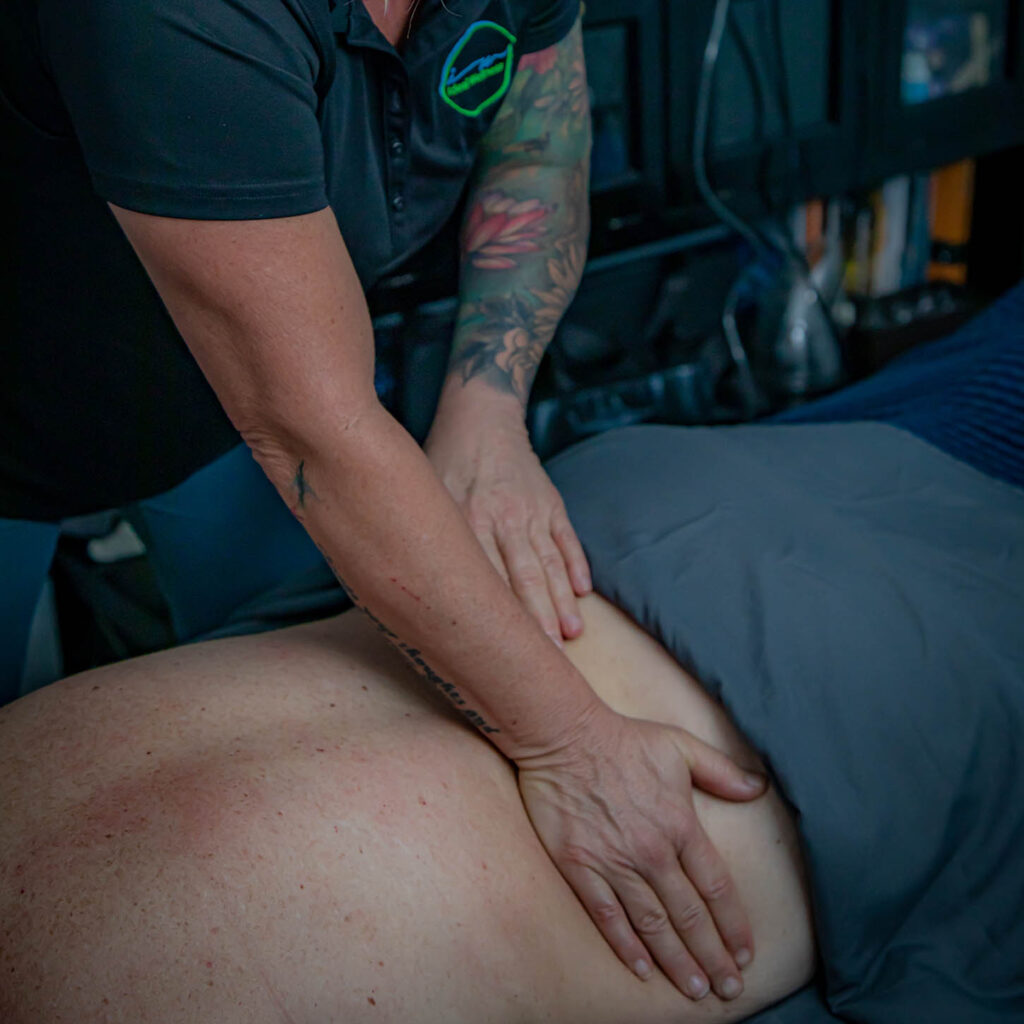
While good daily habits prevent screen fatigue from building up, recovery strategies help reverse it once it’s already built up. Massage therapy plays a unique role because it addresses both physical tension and nervous system overload.
At Ideal Wellness, we see this pattern regularly. Many clients come in describing low energy, tight necks, and mental fatigue after long workdays, even when they exercise consistently. In most cases, the root cause is prolonged screen time combined with static posture. Once we address upper back tension, neck strain, and nervous system overload through targeted massage, clients often report clearer focus and improved energy within a few sessions.
Published research shows that massage therapy improves circulation, reduces muscle stiffness, and lowers fatigue after prolonged static work. It clearly shows that massage therapy is highly effective in reducing strain and blood pressure among employees. Other studies have demonstrated reductions in cortisol and an increase in serotonin following massage, which signals that the body is shifting out of stress mode and into recovery.
For active professionals who balance intense training with desk work, this matters. Massage helps undo the postural strain of sedentary work so the body can move efficiently again. This means more energy for workouts, for fun, or simply more energy to live a happy life.
More from Ideal Wellness
If you are also suffering from bad posture from long hours in front of the screen, here is a detailed article about easy lifestyle changes to correct your posture and reduce pain.
Why These Methods Work Best Together?
Screen fatigue isn’t caused by one thing, and it rarely responds to one solution. It’s the result of visual strain, reduced movement, and nervous system overload. When movement, eye care, and recovery practices like massage therapy work together, they prevent you from feeling drained.
Over time, these habits reduce discomfort, and change how your body handles long hours of screens, making screen fatigue easier to manage. You get tired less, and even when you do, you recover quickly.
Working with active adults and professionals in Juno Beach, we consistently see how small recovery gaps from screen use can compound into daily fatigue. Addressing those patterns early makes a noticeable difference.
Build good lifestyle habits to fight screen fatigue and leave the rest to the expert massage therapists at Ideal Wellness. Start your journey to a more energetic new year by booking a massage session at Ideal Wellness.
Featured Image Credit: energepic.com