
If your days feel like a constant balancing act between work, training, family responsibilities, and trying to stay healthy, you are not alone. Wellness today has become just another item on an already packed schedule. For many people, the challenge is not knowing what healthy habits are, but finding a realistic way to maintain them consistently.
The good news is that a successful wellness routine for busy people does not require two-hour morning rituals, restrictive diets, or perfect discipline.
In fact, research by Harvard Health, American Journal of Lifestyle Medicine, and more shows that small, sustainable habits often create the biggest long-term impact on energy, recovery, stress management, and overall health.
The key is building a routine that works with your lifestyle instead of against it.
Whether you are a busy professional, active parent, endurance athlete, or someone simply trying to feel better day to day, this guide will help you create a daily wellness routine that is flexible, effective, and realistic.
Table of Contents
Why Most Wellness Routines Fail
Many wellness plans fail for one simple reason: they are designed for ideal circumstances, not real life. Let’s look at where many popular wellness routines fall short.
Too Complicated
One of the biggest mistakes people make when trying to build a wellness routine is overcomplicating it.
Social media often promotes extreme morning routines, expensive supplements, rigid meal plans, and unrealistic workout schedules. While these routines may look impressive online, they are difficult to maintain long term.
A sustainable, healthy routine for a busy schedule should feel supportive, not exhausting.
If your routine requires constant perfection, it will likely become overwhelming within a few weeks, if not days.
Too Time Consuming
Busy adults often believe they need large blocks of free time to improve their health. Many people feel like they need large blocks of free time to improve their health. Because those blocks rarely appear, wellness often gets pushed further down the list.
According to the American Heart Association, even short bouts of physical activity throughout the day can support cardiovascular health and improve energy levels. Consistency is key, not intensity.
Not Personalized
An athlete training for endurance events has different physical needs than a working parent managing stress and fatigue. Sleep needs, nutrition, schedules, stress levels, and recovery capacity all vary. Generic plans often ignore real-life constraints.
One of our clients, a consultant who traveled frequently for work, decided to start meal prepping to eat better. It had worked really well for a college friend who owned a local business and followed a very structured schedule. Every Sunday, his friend prepared macro-counted meals for the entire week and swore by the system.
Our client tried doing the same thing. He started with the best intentions, cooking Sunday afternoons and packing containers for the week. The problem was that he traveled three days a week, often flew out early Monday mornings, and regularly had client dinners that ran late.
By Tuesday, meals were getting left behind in hotel mini-fridges or tossed before flights home. Within a few weeks, the entire system fell apart.
The issue was not meal prepping itself. It was trying to copy a routine built around someone else’s lifestyle.
When he came to us, we created a more personalized approach that focused on healthier travel choices, simple routines, and realistic habits he could actually maintain.
There is no one wellness routine for busy people. The best routine is one that adapts to your lifestyle instead of forcing you into someone else’s template.
What a Sustainable Wellness Routine Actually Looks Like
A realistic daily wellness routine is not about doing more. It’s about doing what matters every day.
Strive for Consistency, Not Perfection
Repeated small behaviors are more likely to become automatic over time than drastic lifestyle overhauls.
That means:
- Walking daily is better than one intense workout followed by burnout
- Creating a sleep routine matters more than sleeping 9 to 10 hours for a week and then falling back into old habits
- Balanced meals for most of the week outperform restrictive dieting that gets abandoned
Your wellness journey should reduce stress, not create more of it.
Small Inputs Compound to Big Outcomes
Simple wellness habits may seem small in the moment, but they add up over time.
Many evidence-based wellness habits take less than twenty minutes:
- A short morning walk
- 5 minutes of mobility work
- Meal prepping for the day
- Drinking more water
Chronic stress and poor sleep can negatively affect recovery, immune function, focus, and long-term cardiovascular health. Small daily improvements in these areas can significantly improve overall well-being.
Built Around Your Schedule
Your routine should adapt to your life, not the other way around. You should be able to maintain it on busy days:
- A busy executive may benefit from healthy snacking habits and evening workouts
- An athlete may prioritize hydration, mobility, and sleep quality
- Parents may need flexible exercise routines and simplified nutrition habits
Your wellness routine should support your life instead of competing with it.
The 4 Core Areas to Focus On
If you want to build a wellness routine that actually works, focus on the fundamentals first.
Sleep
Sleep is one of the most overlooked performance and recovery tools available.
You should aim for at least seven hours of sleep per night for optimal health. Poor sleep affects memory, metabolism, immune function, and even emotional regulation.
Simple habits that help improve sleep:
- Keep a consistent sleep and wake time, even on weekends
- Reduce screen exposure 30–60 minutes before bed
- Keep your room cool and dark
- Avoid heavy meals late at night
Even improving sleep by thirty to sixty minutes per night can noticeably increase energy levels within weeks.
Nutrition
Nutrition does not need to be complicated to be effective. Focus on whole foods, balanced meals, and portion awareness over restrictive eating patterns.
Healthy eating habits include:
- Prioritize protein at meals
- Stay hydrated
- Eat fruits and vegetables daily
- Avoid skipping meals regularly
- Use repeatable healthy meals for busy days
- Limit ultra-processed snacks during high-stress periods
Small improvements often create noticeable changes in energy and consistency.
Movement
You do not need intense workouts to improve your health. Even light daily activity improves circulation, mood, and metabolic health.
Ways to include movement throughout the day:
- Walk after meals
- Take the stairs when possible
- Strength training two to four times per week
- Stretch while watching TV
- Join a local recreational club
- Beach walks are a simple way to add movement and recovery time
Even short movement breaks matter.
Recovery & Stress Management
Chronic stress impacts sleep, hormones, digestion, and performance. Long-term stress can contribute to fatigue, inflammation, and reduced immunity.
Simple recovery habits include:
- Five minutes of deep breathing daily
- Light stretching or foam rolling in the evening
- Short mental resets during work breaks
- Spending time outdoors for natural light exposure
Recovery should not be treated as optional. It is part of improving overall well-being.
A Simple Daily Framework You Can Follow
A strong daily wellness routine should be flexible enough to be practical.
Morning (15-30 minutes)
Your morning sets the tone for the day.
- Stay away from screens when you wake up
- Drink a full glass of water immediately
- Do five to ten minutes of light movement or stretching
- Aim for a protein-heavy breakfast
- Get brief sunlight exposure to support your circadian rhythm
The goal is to activate your mind and body without becoming overwhelmed.
Mid-Day (15 minutes)
This is where many routines begin to fall apart.
- Take a short walk after lunch
- Do a hydration check-in
- Deep breath for two to three minutes
- Eat a healthy snack instead of processed options
A mid-day reset helps maintain healthy habits when life gets busy.
Evening (20–60 minutes)
This is the time to focus on movement and recovery.
- Light stretching or mobility work
- Balanced dinner with protein, vegetables, and healthy fats
- Reduce screen brightness after sunset
- Wind-down routine with reading, breathing, or journaling
Creating a calm evening routine often improves sleep quality and recovery.
How to Personalize Your Routine
Once you have established a consistent baseline routine, the next step is refinement.
This is where personalization can make a meaningful difference. It can help you move from a general healthy routine to one that aligns more closely with your body, lifestyle, and performance demands.
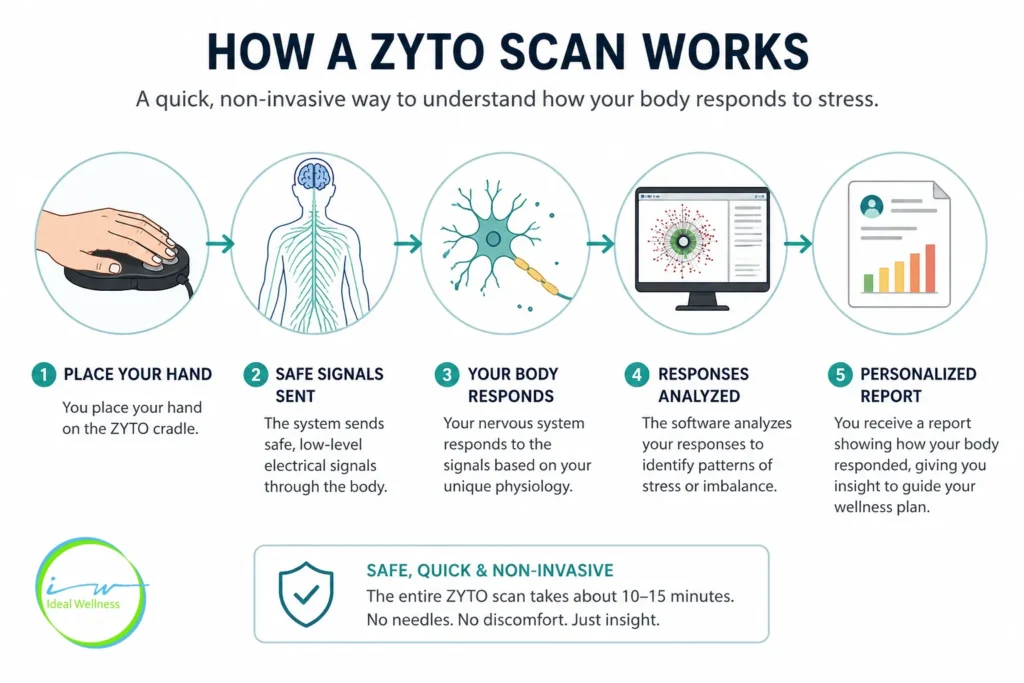
Two tools often used in this process are metabolic testing and ZYTO scans.
- Metabolic testing helps provide insight into how your body uses energy at rest and during activity. This can support more informed decisions around nutrition and training rather than relying on generalized guidelines.
- ZYTO technology is a non-invasive assessment tool that may help identify patterns related to stress response and overall physiological balance.
Together, these insights can help fine-tune your wellness approach and support more informed decisions around recovery, nutrition, stress management, and performance.
The goal is to move from guesswork to guided decisions so your routine works with your body instead of against it.
More from Ideal Wellness
Learn more about metabolic testing and ZYTO scans to understand they can support more informed lifestyle decisions.
Start Simple and Build Over Time
You do not need to change your entire life overnight to build healthier habits. Trying to overhaul everything at once often leads to burnout.
Start with one or two changes, like drinking water first thing in the morning or going to bed at the same time each night.
Once these habits become routine, add more.
The key is remembering that a wellness routine for busy people is not about doing more. It is about doing what actually fits your existing life.
Build a Wellness Routine That Works for You
Creating a healthier routine does not require perfection. Small changes often create the biggest long-term impact when they fit naturally into your daily life.
If you’re looking for a more personalized approach, Ideal Wellness offers services such as metabolic testing and ZYTO scans that can provide additional insight into nutrition, recovery, and overall wellness.
Learn more about our wellness services and discover what works best for you.
Or request more information through our contact form below.
Or request more information through our contact form below.
Image Credit: Garon Piceli
Contact Ideal Wellness
Get In Touch
Have a question or want help choosing a service? Reach out anytime.
- 13700 US-1 STE 202A, Juno Beach, FL 33408
- (561) 345-0956